At the heart of any great outdoor living space is a well-designed, expertly installed stone patio or walkway. The stone you choose sets the tone for the whole space, and each type has its own look, feel, and trade-offs. Here are six to consider and what each one does well.
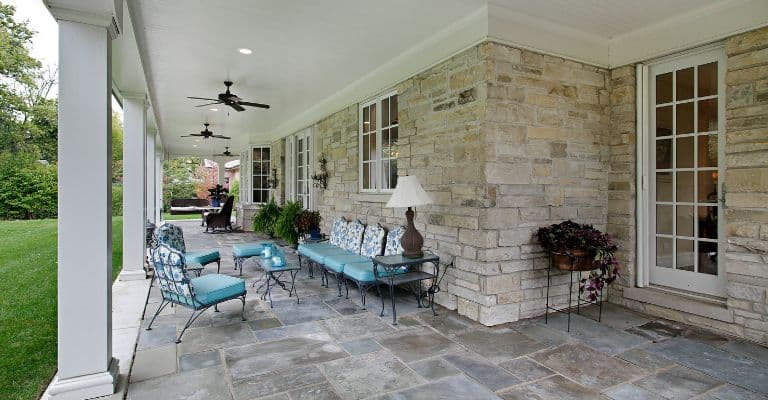
1. Bluestone
Bluestone is known for its blue-gray tones, though it also shows up in green and rust. It has a textured surface and comes in a range of thicknesses, which makes it a go-to for elegant patios and walkways.
Advantages of Bluestone
- Cut to custom shapes and sizes
- Available in freeform "broken" pieces for a natural look
- Holds up well through the freeze-thaw cycle
Disadvantages of Bluestone
- Porous, so it needs sealing to keep its color and luster
- The natural irregularities call for an experienced installer
- Darker stone gets hot underfoot, so it is a poor pick around pools
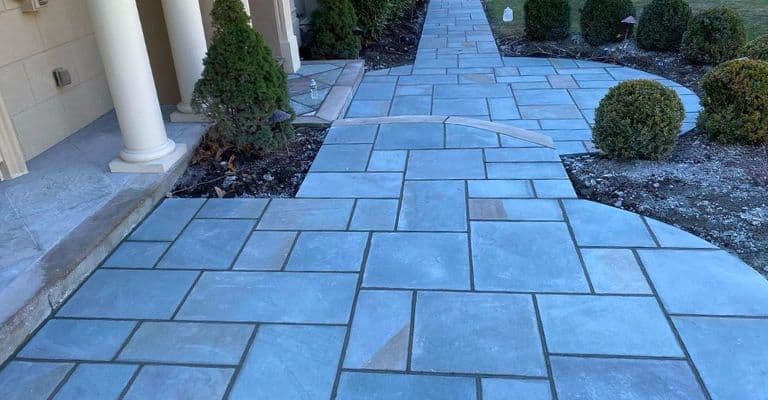
2. Thermal Bluestone
Thermal bluestone is bluestone that has been heat-blasted for a more uniform look, with little variation in the surface texture.
Advantages of Thermal Bluestone
- Sleek, consistent surface
- Non-slip and lighter-toned, which suits pool areas
- Even thickness makes installation easier
Disadvantages of Thermal Bluestone
- The thermal process adds noticeably to the cost
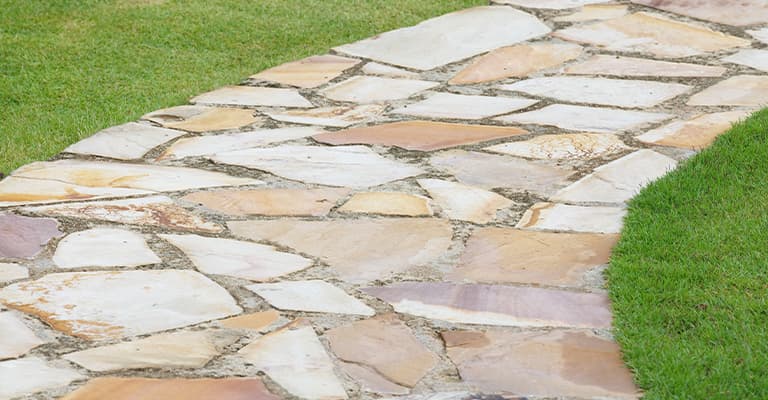
3. Fieldstone
Fieldstone is irregular in shape, color, and size. Those natural stones create a relaxed, organic look and are perfect for stepping-stone pathways.
Advantages of Fieldstone
- Minimal modification keeps the natural appearance
- No two stones are alike, so every layout is unique
- Can be set without mortar
Disadvantages of Fieldstone
- Irregular shapes will not level perfectly or fit tight
- Not the best choice under outdoor dining areas
4. Brick
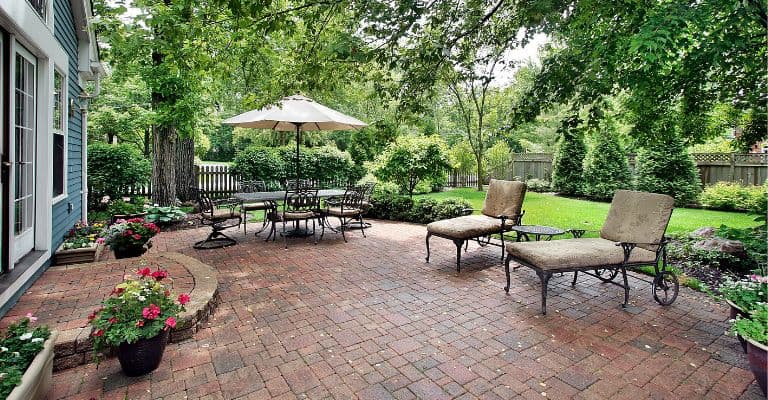
Brick is a clay-based option with an old-fashioned look, reminiscent of an old English garden, and a distinct reddish color.
Advantages of Brick
- Goes in quickly, even with mortar
- Individual bricks are easy to replace if one gets damaged
- Holds its color and offers versatile patterns like basket-weave and herringbone
Disadvantages of Brick
- Higher material and labor costs
- Can grow moss in shaded, damp spots
- Absorbs water, which wears it down over time
5. Limestone
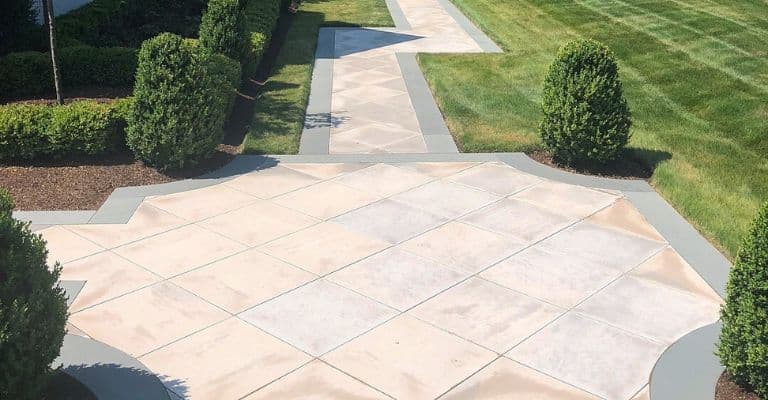
Limestone is timeless and has been used in architecture all over the world for thousands of years. It comes in a range of textures, shapes, colors, and surface treatments.
Advantages of Limestone
- Light colors deflect heat and stay cool, great for barefoot summers around a pool
Disadvantages of Limestone
- Sensitive to acidic substances, so keep it away from fruit trees
- Heavy, which raises transportation costs
6. Concrete Pavers
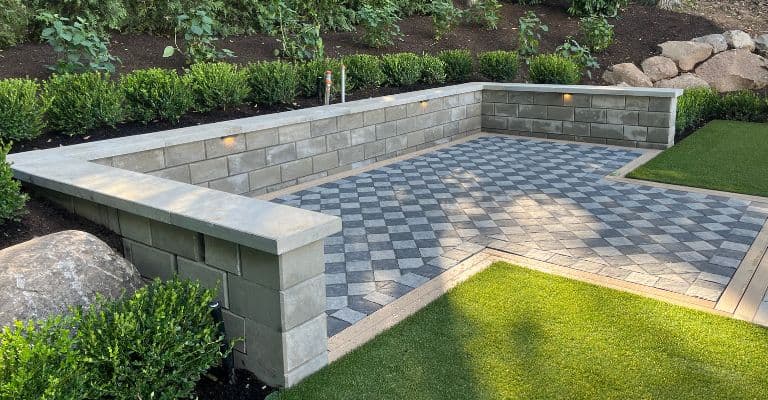
Concrete pavers are an affordable alternative, made by pouring cement into molds. That gives them a lot of range in shape and color while mimicking the look of natural stone.
Advantages of Concrete Pavers
- Durable and available in a wide range of sizes
- Highly customizable with ornamental patterns or stone-like textures
Disadvantages of Concrete Pavers
- Dyed versions can fade in sunlight
- Quality varies, so professional installation is recommended
Ask the Hardscaping Experts
Not sure which stone is right for your patio or walkway? We can walk you through it. Solicito & Son is a family-owned business with over 40 years of experience, and we offer free consultations on hardscaping projects across NJ, NY, and NYC.
Let’s build your patio or walkway.
Free hardscaping consultations across the tri-state. Request a quote.
More field notes.
- Nº 01Stonework & Masonry
What's the Difference? Bluestone vs Thermal Bluestone
Look, durability, slip resistance, and price: how regular bluestone and thermal bluestone actually compare.
October 2, 2023 - Nº 02Stonework & Masonry
Choosing the Perfect Outdoor Fireplace for Your Backyard
Wood, gas, or ethanol, plus how to size, place, and maintain an outdoor fireplace that fits your yard.
August 5, 2023 - Nº 03Commercial
Urban Landscape Construction in NYC: What Developers Need to Know
What developers, property managers, and general contractors should sort out before breaking ground on landscape work in New York City.
April 6, 2026